Blog by

Paul Bongers
In my role as a second track reintegration specialist, I often have contact with HR advisors and their sick employees. Employees who have been ill for a long time and often have quite a history. Usually, I am called in around the end of the first year of sick leave: “Paul, we have received the labor expert’s report for our employee and we’re required by the labor expert to start a second track reintegration process. Could you take care of this, and what do you need for it?”
But is it really an obligation, or not?
It’s great that HR calls us in on time. But when I hear the word ‘must’, it brings out my allergy. Why *must* you start a second track process? Is it really a requirement, or is it not? A second track reintegration process is indeed mandatory if an employee has been ill for more than a year and cannot return to their own job with their current employer. According to the Improved Gatekeeper Act, the employer (there it is again😉) must actively search together with the employee for suitable work with another employer if returning to the original employer isn’t possible. This is called the second track reintegration. The goal is to reduce long-term sickness absence and provide the employee with a new workplace where they can function, despite any limitations.
Costs time, money, and yields nothing...
What I love about the words above is “… a new workplace… despite the limitations.” For me, this means (and perhaps you could see it this way too) that the employee is working again and doing what they *can* still do. So, not based on limitations, but on possibilities. If their own job is no longer possible, maybe it will work out somewhere else. Isn’t that great?!
But why do companies and employees view reintegration as an obligation?
The employer likely sees reintegration as an obligation because there is little time (and little enthusiasm) for such a time-consuming task. Or they simply don’t understand how a second track process works. In addition, it costs money and they may think it won’t deliver anything. And the employee? Often, they have absolutely no desire for another job. They want to stay with the employer and now they’re ‘forced’ to seek other work. I think it’s the same for both: unfamiliar and unappreciated. And I admit, it’s never fun to apply for or undergo a second track process.

But what if...?
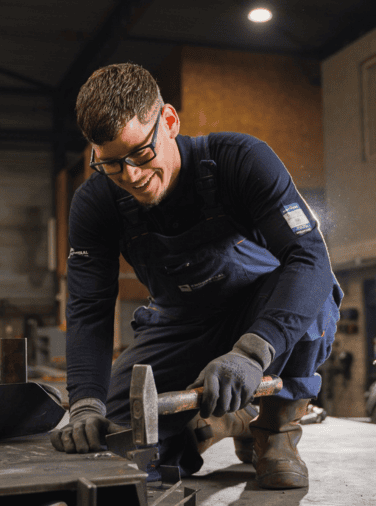
But how wonderful is it if an employee can no longer do their current work but is able to function elsewhere. A different job where they become happy again. A great example is the mechanic I personally guided last year. Due to physical problems, he could no longer do his job, but he didn’t really want to leave his employer. The employer saw it as an obligation and called in MEPD.
Together, we looked at what was still possible. And now the mechanic works as a cost estimator at another company in the installation industry. It’s great to see that this employee now enjoys his work (and life) again. He is grateful to his former employer for presenting this solution—a better ambassador, you couldn’t wish for.
No suitable new position; still grateful employees
Of course, there are also cases where it’s not possible to find a suitable new position. Even then, after the “104 weeks,” I often speak with grateful participants. Employees who have tried everything to find work, but it just didn’t happen. They are thankful for the help provided and for the clarity. That also brings peace of mind. I have, more than once, toasted with a participant with a glass of Grand Marnier to that.
As far as I’m concerned, let’s agree not to talk about “we have to start a second track process” anymore, but rather about providing new opportunities and new job satisfaction to an employee on sick leave.
Would you like to get in touch with me about this topic? Feel free to leave a message!
Read the blog by my colleague Yaqueline about diversity and inclusivity as well

Paul Bongers
Process manager and career advisor
I now have over 25 years of experience in HR. From recruitment and selection to conducting interviews and supporting employees who are looking for a new job, as well as carrying out development and reintegration processes.