Four years ago, René Rogaar joined Hitachi Construction Machinery in Amsterdam. As Coordinator Training & Development, he had a clear assignment: to build on the development of people. Not an easy job in an organization with deep roots and long-established habits. Still, René sees—and continues to see—exactly that as the challenge. Because in a market that changes at lightning speed, staying still is simply not an option.
Embedded processes
“When I started here, I quickly noticed that many processes had been created based on the idea: ‘We are a Japanese company; this is just how we do it.’ There’s nothing wrong with that, but the world around us is changing incredibly fast. Then you have to keep looking at what the customer needs and what contribution we make to that.”
According to René, that kind of change asks a lot from both employees and managers. “New developments require new knowledge and different skills. That means we have to take people along from ‘we’ve always done it this way’ to ‘what will we need tomorrow?’. And that’s not something you can accomplish overnight.”
Conversations as the engine for growth
To set that movement in motion, Hitachi developed a strategic approach in which development and performance go hand in hand. “With our Performance Management program, we help managers look at their role differently. What is the organization’s goal? How does your department contribute to it? And how do you help employees be successful in it? These conversations now take place multiple times per year. Not only about results, but also about growth and development. Managers discuss where employees can develop further and which steps go with that. We use a Competence Framework for this. It helps provide insight into behavior, competencies, and development opportunities.”
See how you contribute to the bigger picture
What René especially likes is that, as a result, employees understand better how their work contributes to the bigger picture. “You see that people feel more connected to the organization when they understand why their work matters. The question shifts from ‘what do I need to do?’ to ‘where do I contribute?’.” And it’s already starting to deliver tangible results.
“We’re now about a year in and we’re seeing some great changes. The majority of our managers has embraced the new approach. In addition, we notice that employees themselves are coming up with more ideas for improvements and innovations. That’s exactly the kind of shift we want to see. At the same time, it remains a process of the long haul. People are busy. Especially managers often have a high workload. They’re not always waiting for the question of whether they are paying enough attention to employees’ development. That’s why we need to keep having the conversation about urgency, continuity, and the future.”
Because, according to René, investing in people isn’t a luxury—it’s a necessity. “We need to show what happens when we don’t invest. Which knowledge do we lose? Which opportunities do we miss? From Training & Development, we play a supportive and enabling role in that.”
The manager makes the difference
When the discussion turns to leadership, René doesn’t have to think for long. “For me, a manager is absolutely a driving force. A good manager makes clear where the organization wants to go, how the team contributes to that, and how he or she can support employees in doing so.” But at least as important, he believes, is the human side. “A manager can motivate, inspire, and challenge people to develop. That ultimately makes the difference.”
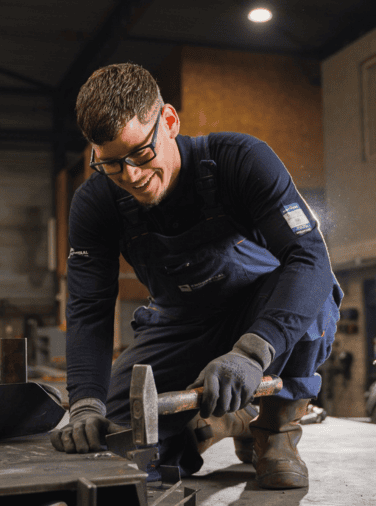
Another topic, too, deserves increasing attention, according to René: employability in the long term. “Many of our employees do physically demanding work. Then the question is: how do we ensure that they remain valuable even at a later age? And how do we ensure that their knowledge is passed on to a next generation?”
In his view, that directly relates to personal leadership. “Ultimately, it comes down to continuing to develop yourself and continue to contribute to the organization’s goals. Not because you have to, but because that’s how you remain future-proof—for yourself and for the organization.”