



Blog by

Joanne Bouwers
√ All HR tools in order: check
√ A good collective labor agreement: check
√ Room for development: check!
Yet employees are still leaving the organization? It could very well be due to the demand-driven market, which shows what truly motivates employees. Do you dare to look into this? One question you should explore is: Does HR in your organization still get enough time and space to focus on staff?
From personnel affairs to Human Resource Management
Within organizations, control and forecasting are increasingly on the rise. It’s becoming easier to make predictions using software: Are we on track with our organizational goals? What needs to be adjusted? It’s not surprising that the average company nowadays uses measurable indicators to gain control over business processes. In this way, we also see a shift from personnel affairs to Human Resource Management. Mapping out human capital. What does the employee need to perform optimally? To achieve the highest return?
For years we’ve observed the employee as a human being and have developed models that predict behavior. We record competencies that are decisive for achieving organizational goals. Because measurement is knowledge: Ultimate efficiency! However, it doesn’t seem as effective in the long term as we expect. The question is whether human capital is optimally utilized without a people-oriented approach?
Goals and concrete results
As a career coach, it’s now almost unthinkable to start a coaching program without preset goals. The proposal must state in advance what the expected outcome will be. The HR professional often literally no longer gets the time to have personal conversations with employees. In assignments I carry out, goals are already included in the proposal. Objectives in terms of what the program should concretely deliver and its contribution. In personal coaching it’s often about finding out where things are stuck in a career. These objectives are sometimes simply impossible to describe beforehand, because the result of the coaching is often the insight that leads to objectives. Even in other projects, an extensive intake—sometimes two conversations—is needed just to determine what the actual goal will be.
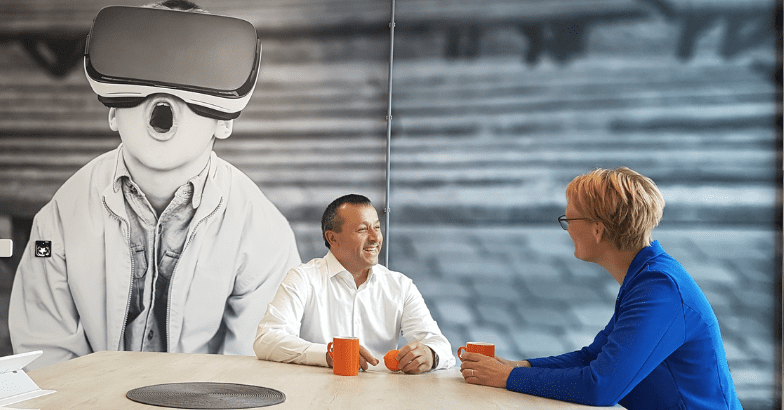
Attention, understanding, and space
While coaching is all about attention, understanding, and space for the person as a human being. Something that is often no longer felt in the current role. You can predict a lot, but there are moments when people draw their own conclusions, along with all the accompanying emotions. And we actually need those emotions and empathy. This is a crucial factor in a people-centered approach and can’t be found in software models. In other words: The difference between software and the HR professional. If we once again give HR professionals the time and space to pay attention to and look after employees, this will be reflected in the company culture. An employee feels seen, heard, and understood. The result is great enthusiasm and engagement within the organization. And that, in times like these, is the greatest gain you can achieve.
Freedom and space pay off
My observation: You can’t put everything into models. If you steer too much by the models/software, you run the risk of assuming that people always respond or produce in the same way. People are not machines; they simply need attention. Are employees leaving your organization? Then dare to look together with HR to see if there is enough room to deviate from the models. Create space and time for conversation. Ultimately, this results in an employee who feels better and is more engaged and productive.
See also the previous blog by colleague Nelis

Joanne Bouwers
Career advisor
I know how to discover someone’s strengths and use them to achieve a goal. By using practical examples and metaphors with appropriate humor, I can coach and train in a clear and understandable way.


